Adoption Information
Thank you so much for choosing adoption and welcoming one of our cats or kittens into your life. You’ve not only changed their world — you’ve become part of ours.
Whether you’ve brought home a bold explorer or a quiet soul still learning to trust, we’re thrilled for you and honoured to have played a small part in this new beginning.
Congratulations on your new companion — may your days together be full of love, laughter, and the kind of quiet magic only rescue animals bring.
Introducing Pets
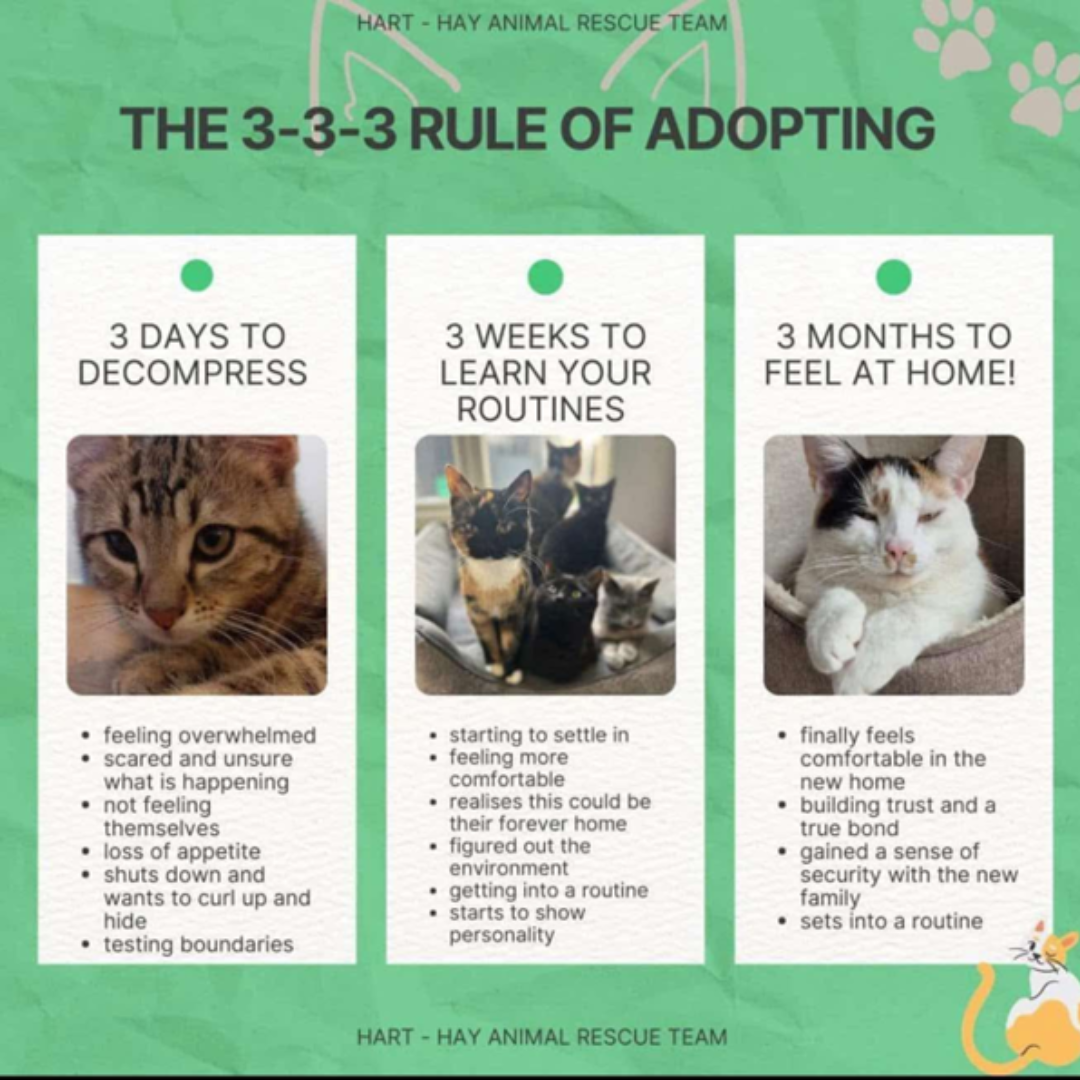
Go slow. Really slow. Let your new pet decompress before meeting resident animals.
For cats, we recommend Jackson Galaxy’s introduction method — it’s brilliant for gradual, scent-based intros. You can watch a helpful walkthrough here:
For dogs, supervised, neutral territory meetings work best.
Microchip Transfer
All our animals are microchipped before adoption. It’s the new owner’s responsibility to update the chip details online via the chip company. You’ll find the chip number on your adoption paperwork.
These are the chip companies we typically use:
This link will tell you the company the chip is registered with:
Food & Tummy Upsets
Sudden changes in diet can cause upset stomachs. Please transition slowly to your preferred food over 7–10 days.
Stress and travel can also cause temporary tummy issues — it’s normal in the early days.
Vet History
Your vet can request your new pet’s medical history directly from our vet. This is why we include our vet’s details in your adoption contract.
Litter Tray Tips
Start with one quiet room and one litter tray per cat/kitten. Use the same litter type they’re used to — we’ll let you know what that is.
Once they’re confident, you can gradually expand their access to the rest of the home.
Children & New Pets
Give everyone time. Children should be supervised and taught to respect the animal’s space. Let your new pet approach in their own time — never force interaction.
Flea & Worming
All animals are treated for fleas and worms before adoption. We’ll let you know the last treatment date and product used.
Please continue regular treatments as advised by your vet and be aware of the dangers surrounding over the counter medication.
Vaccinations
Kittens receive two starter vaccines, given 3–4 weeks apart. After that, they’ll need a yearly booster to stay protected. It’s important that the booster matches the brand of the initial vaccines — we use Purevax or Leucofeligen, so please check your vet stocks it to avoid restarting the course.
Your vet can guide you on timing and coverage — it’s a simple but vital part of keeping them safe.
Need Help?
If you’re unsure about anything or need support settling your new companion, please don’t hesitate to reach out.
We’re here for you — and them — every step of the way.